

-
 Put on your armor—it’s time to fight. We are in a spiritual war, William Gurnall reminds us, and “the Christian’s safety lies in resisting. All the armour provided is to defend the Christian fighting, none to secure him flying; stand, and the day is ours; fly or yield, and all is lost.” This hard-hitting volume is packed with biblical wisdom for day-to-day Christian living, as helpful today as it was when first published nearly four hundred years ago. Although history left us little knowledge of William Gurnall’s life, it preserved this book—a legacy that has encouraged many generations of saints to fight sin, love Christ, and live holy and faithful lives as Christians who have clothed themselves in the complete armor of God. “Amongst all the Puritan writings that have come down to us, none…are more practical than this one.” – Hamilton Smith Have an Audible subscription? You can also get this title on Audible here.
 -
 The Christian faith has repeatedly been called a “religion of the book.” Along with the incarnate Word and the oral word of preaching, God has chosen the medium of books to proclaim His goodness to us. The Bible is the book per se, and it sets the standard for the Christian faith. The Protestant Reformation of the sixteenth century saw the dramatic power of the printed word to bring light out of darkness as literature changed the thought and life of nations. The Reformers used pamphlets and tracts extensively to bring about spiritual revolution—the printing press turned out to be the lever with which the enemy was lifted from his saddle. In A Religion of Books, Bockmuehl traces the role books played in the Reformation and through various movements of the Spirit in the following centuries. He also addresses how the written word shapes political movements and how Christians can continue to use literature to point people to Christ.
 -
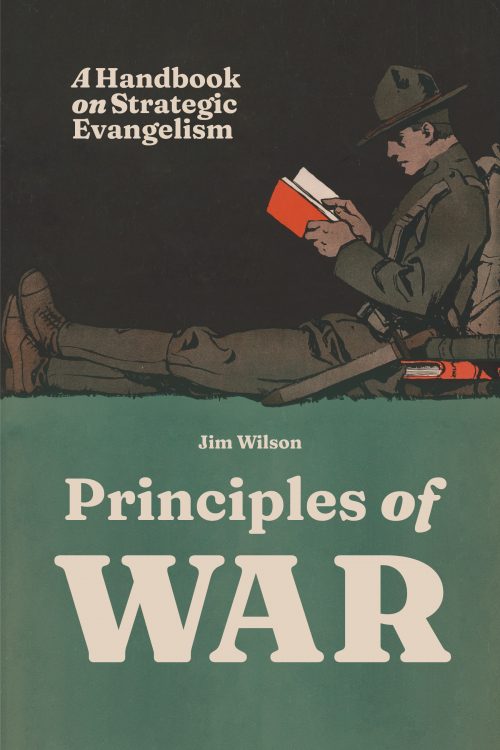
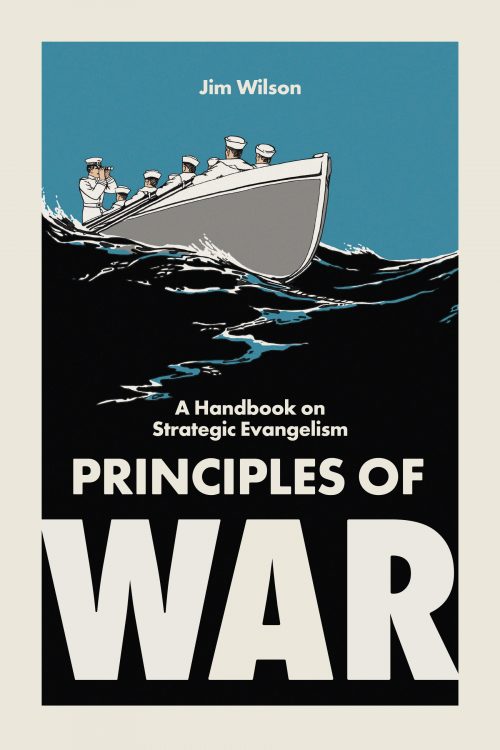 In the study of warfare, great men have concluded that there are some overriding principles which, if followed, will always tend toward success in battle, and if neglected or ignored, will tend toward defeat or even destruction. These principles have been entitled the "principles of war." But not all warfare is waged on a battlefield: every Christian is called to be a soldier. Our fight is against Satan, our objective is the acknowledgment and fulfillment of God's commands, and our ammunition is the power of the Holy Spirit. In Principles of War, Jim Wilson outlines the time-tried, fundamental principles of war and explains how we can employ them in our daily spiritual battles as we fight a war which our commander in chief has already won for us.
 -
 “Revolutionary love” sounds like an oxymoron. Revolution is usually a negative, violent, and destructive change, while love is positive, peaceful, and contented. But true love always changes people. And Christ’s love brings the most revolutionary change of all. Festo Kivengere (1919–88) experienced both kinds of revolution. He escaped Uganda when the brutal regime of Idi Amin seized power. But he could not escape the pursuit of Jesus, who came into his life with radically transformative grace. In Revolutionary Love, Kivengere tells his story of learning to freely receive Christ’s love and freely share it with others. Have an Audible subscription? You can also get this title on Audible here.
 -
 “The unity of the Body is one of the most forceful apologetics for the divinity of Christ. Conversely, disunity is Satan’s most successful tool.” – Otto Helweg
God’s glory in us is the basic provision for Christian unity. “I have given them the glory that you gave me, that they may be one as we are one: I in them and you in me. May they be brought to complete unity to let the world know that you sent me and have loved them even as you have loved me” (John 17:20-23).
The primary assumption in this book is the authority and inspiration of the Scriptures. There are promises, prayers, and commands in the New Testament concerning the church’s unity in Christ. The Christian church is made up of individual members of the body of Christ. This book is written to those individuals. The church as a whole cannot obey God. Only the parts can.
Have an Audible subscription? This title is also available on Audible here. -
 During his time at Oxford, a friend asked Paget Wilkes one day, “I say, Paget, do you tackle everyone who comes into your rooms about his soul?” “Yes,’ answered Paget, “if he comes in alone.” Wilkes was convinced that even the humblest Christian is responsible for bringing men to Christ. “If we have been forgiven and know it, if we have been made new creatures in Christ Jesus, then we…are commissioned to minister this same salvation unto men and to witness of all these things which Jesus our Savior has revealed to us. Hallelujah!” The primary need of the mission field today, as it was in Wilkes’ time, “is not for a highly educated and cultured pastorate, but for red-hot evangelists, filled with the Spirit and with the Word.” Join Wilkes as he expounds the living Christ from Scripture and reveals the power of the Holy Spirit to uphold and enable converts and evangelists alike.
 -
 Disobedience. It’s normal, right? For hundreds of years, the Church has struggled with how to overcome sin in the Christian life. We know that the cross takes care of our past sins at salvation and assures us life after death. But what do we do with the time in between? Many Christians go through life sinning and confessing, sinning and confessing, but they never get beyond that. Is that better than sinning and not confessing? Absolutely: but it is not enough if you want to grow. Contrary to most evangelical teaching today, Christian obedience is meant to be glad-hearted, willing, and normal. In Dead and Alive, Jim Wilson discusses the neglected requirement of obedience and explains God’s provision for it from Scripture. May the thoughts in it lead you into a victorious, obedient life in Christ. "But just as he who called you is holy, so be holy in all you do; for it is written: 'Be holy, because I am holy.'” (1 Pet. 1:15–16) Have an Audible subscription? This title is also available on Audible here.
 -
 Insist that Christ is Lord, and you divide the world. While most societies acknowledge God in some way or another, Christ as Lord is not so universally honored. For Christians, this matter should be settled. Christ is Lord and Savior — but many Christians have little or no idea of the meaning of this simple statement or its implications for our day-to-day lives. Sixty years after its first publication, the message of The Lordship of Jesus Christ is still needed. “In words of gentle, yet pointed, rebuke, Christ turned to His disciples with the very pertinent question, ‘Why call ye me, Lord, Lord, and do not the things which I say?’ (Luke 6:46). Holiness is not correct Christian phraseology, but an unreserved commitment to unquestioning obedience to whatever the Lord requires.” – Bill Pape, The Lordship of Jesus Christ Have an Audible subscription? This title is also available on Audible here.
 -
 In a world of dysfunctional families, churches, and societies, professional counseling is in great demand as a solution to our problems. The weak link in this solution is the inability to determine a counselor’s qualifications apart from his professional accreditation. Academics can give you knowledge, but no learning or books can give you wisdom. There are no graduate degrees in love or compassion. You cannot get a PhD in virtue. However, these things are available to everyone freely through Christ. Counseling needs knowledge, but it needs wisdom even more. Wisdom comes from the Bible, from age and experience, from answered prayer. “If any of you lacks wisdom, you should ask God, who gives generously to all without finding fault, and it will be given to you” (James 1:5). As Christians, our objective is to bring others up to maturity in Christ. To do this, we must have the same qualifications Paul had (the wisdom, the holiness, and the love). This book is for counselors and all Christians as they work “to present everyone perfect in Christ” (Col. 1:28). In Wisdom, Not Knowledge, Jim Wilson shares what he has learned from the Bible, personal experience, and answered prayer in more than six decades of counseling. With chapters on comforting, exhorting, rebuking, forgiving, and prayer as well as treatments of special subjects such as depression, false guilt, and self-esteem, this book is a great resource for any counselor, whether you're a professional or just trying to help a friend. Not a counselor? Learn how to grow in Christ and discover solutions to your own problems as you apply the wisdom in these chapters to your life.
 -
 Do you feel weighed down by sin? Is there one area where you keep tripping up? Or perhaps although you know you are a Christian, your spiritual life seems mediocre. You’d like to be living joyfully, but you just don’t know how. In this sequel to How to Be Free from Bitterness, Jim Wilson returns to talk about how to get rid of those persistent “besetting sins.” Many Christians believe they are enslaved to particular sins. But this is not true. The truth is that Christ has freed us from the penalty of sin and the power of sin. If you are a Christian, you are already free. Anger, envy, worry, depression—whatever your problem is, it can be put to death today. “And you will know the truth, and the truth will make you free” (John 8:32). Have an Audible subscription? This title is also available on Audible here.
 -
 Jim Wilson prayed his first real prayer at a Youth for Christ meeting on the night of October 18, 1947. He was introduced to the Father through Jesus Christ, and his life was changed. He describes his prayer life since as sometimes strong, sometimes wavering, “but always to the God who is always faithful.” The quality of our spiritual life depends on the closeness of our walk with God. A major component of that walk is prayer. 1 Thess. 5:17 tells us to “pray constantly.” We are in a spiritual war, and God is our source of spiritual nourishment, protection, and direction. Via prayer we make our needs known, ask help for others, praise Him for victories, confess our defeats, and, most importantly, have fellowship with Him. In Answered Prayer: The Faithfulness of God Made Manifest, you will learn what the Bible teaches about prayer, study its examples of answered prayer, and read Jim’s personal stories from seven decades of walking with the Lord. “My prayer is that this book will help you get into the habit of praying. You may be surprised at the results. As I look back at my own history and all the answers God has provided, I wonder that I am not praying every minute of the day.” – Jim Wilson Have an Audible subscription? This title is also available on Audible here.
 -
 Africa was their home. Could they ever go back? Physical weakness coupled with civil unrest in the Ivory Coast had extended a six-month furlough to several years and threatened to derail the Leidenfrosts’ plans to return to their beloved Africa and continue mission work with the Bakwé people. But now they were finally going home to their village…or so they thought. “On top of all this, a subtle grief over the loss of Africa continued to grip my heart. In my dismal state, I felt the clouds part and God’s presence come down to touch His child. God saw the pain, the loneliness, the need, and was telling me that I was not forgotten. It was too easy to focus on my troubles. I needed to remember that His love is stronger, more real, than the pain I was suffering at that moment. Was I going to focus on His love, or on the pain?” Join Lisa Leidenfrost as she walks through trial after trial and learns to keep her eyes on God, whom she finds by her side through it all. This book is especially recommended for anyone experiencing a long-term health challenge or other hardship with an uncertain outcome.