

-
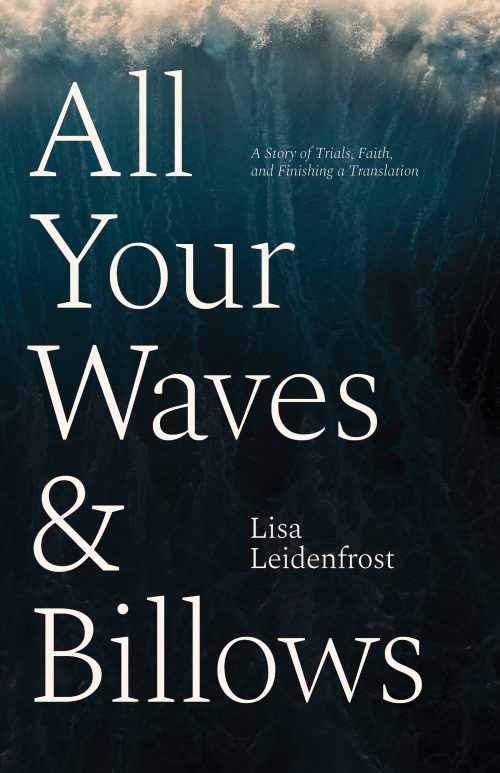 Africa was their home. Could they ever go back? Physical weakness coupled with civil unrest in the Ivory Coast had extended a six-month furlough to several years and threatened to derail the Leidenfrosts’ plans to return to their beloved Africa and continue mission work with the Bakwé people. But now they were finally going home to their village…or so they thought. “On top of all this, a subtle grief over the loss of Africa continued to grip my heart. In my dismal state, I felt the clouds part and God’s presence come down to touch His child. God saw the pain, the loneliness, the need, and was telling me that I was not forgotten. It was too easy to focus on my troubles. I needed to remember that His love is stronger, more real, than the pain I was suffering at that moment. Was I going to focus on His love, or on the pain?” Join Lisa Leidenfrost as she walks through trial after trial and learns to keep her eyes on God, whom she finds by her side through it all. This book is especially recommended for anyone experiencing a long-term health challenge or other hardship with an uncertain outcome.
 -
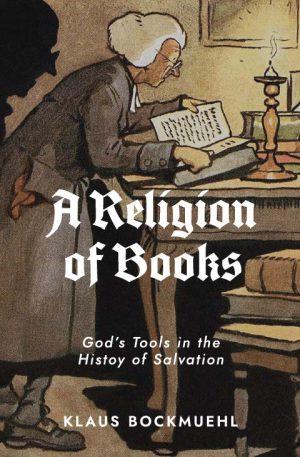 The Christian faith has repeatedly been called a “religion of the book.” Along with the incarnate Word and the oral word of preaching, God has chosen the medium of books to proclaim His goodness to us. The Bible is the book per se, and it sets the standard for the Christian faith. The Protestant Reformation of the sixteenth century saw the dramatic power of the printed word to bring light out of darkness as literature changed the thought and life of nations. The Reformers used pamphlets and tracts extensively to bring about spiritual revolution—the printing press turned out to be the lever with which the enemy was lifted from his saddle. In A Religion of Books, Bockmuehl traces the role books played in the Reformation and through various movements of the Spirit in the following centuries. He also addresses how the written word shapes political movements and how Christians can continue to use literature to point people to Christ.
 -

 The cover colors on the individual volumes are mismatched. No other issues. The 1599 Geneva Bible is a remarkable Bible for many reasons: it was the first English Bible translated entirely from the Hebrew and the Greek, it was the first Bible with chapter and verse divisions, it was the first with a legible font, and the first with maps, notes, and chronologies and indices. Most importantly, it was intended not for displaying in churches, but for family reading.With this in mind, the Modernized Geneva Bible (MGB) updates archaic syntax, spelling, and vocabulary of the first iconic Geneva version, allowing you to read without distraction the most important English Bible of the Reformation: The Geneva went into battle with the Puritans in the English Civil War, the Geneva made enemies of popes and kings across Europe, and the Geneva even went to America with the Pilgrims.But the MGB New Testament is not a facsimile edition intended for scholars of the Reformation. The thirteen thin volumes of the MGB New Testament are meant for one thing only: to be pulled off the shelf and read again and again; to be dog-eared and written in; to be consumed. We Christians learn to desire the pure milk of the Word as newborn infants (1 Pet. 2:2), for without feeding our souls we cannot grow spiritually.